

Why scope, contracts and the project baseline determine performance long before problems become visible.
Many project problems become visible during execution. But that does not mean they started there.
A delayed milestone. A contractor claiming additional time. Costs moving beyond the approved budget. Engineering deliverables arriving later than expected. Construction teams waiting for information, materials or access.
By the time these issues appear in a monthly project report, their underlying causes may have been present for months. A project rarely fails on the day the symptom shows – it fails much earlier, quietly, in the decisions and assumptions that were never tested.
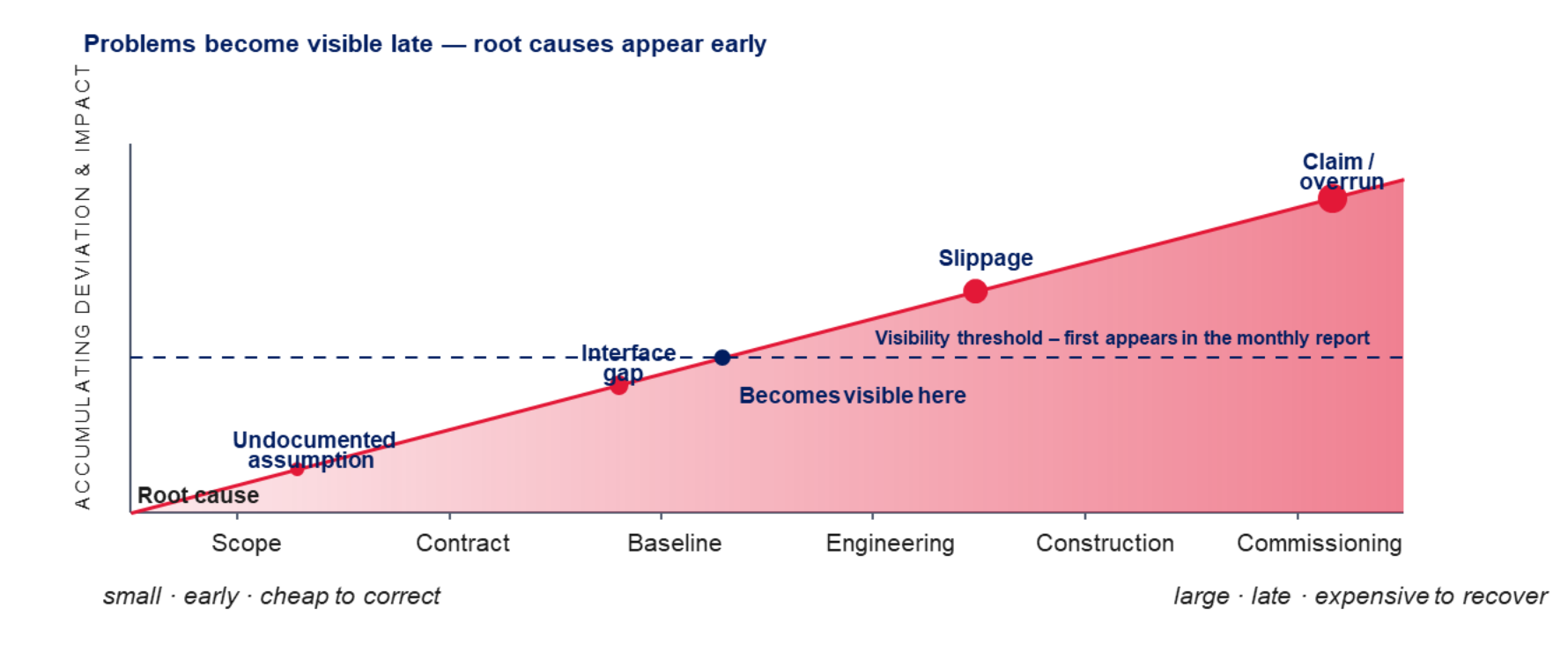
Figure 1 – A small, early deviation accumulates unseen and only crosses the reporting “visibility threshold” late, once it has become costly to recover.
Performance is determined earlier than most teams think
At INGENIVA, we see a recurring pattern in complex projects: execution problems are often rooted in decisions made during scope definition, contracting and baseline development. Problems become visible late, but their root causes almost always appear early.
An unclear responsibility may look like a minor issue at the start of a project. During execution, it can become a delay. A missing interface can become a variation. An unrealistic milestone can become acceleration. An undocumented assumption can become a claim.
This is why Project Controls should not be treated as a reporting function that starts once construction is underway. Its greatest value is created when the project is still being structured. The earlier the project team establishes measurable scope, realistic logic, ownership and traceability, the stronger the basis for forecasting and decision-making later.
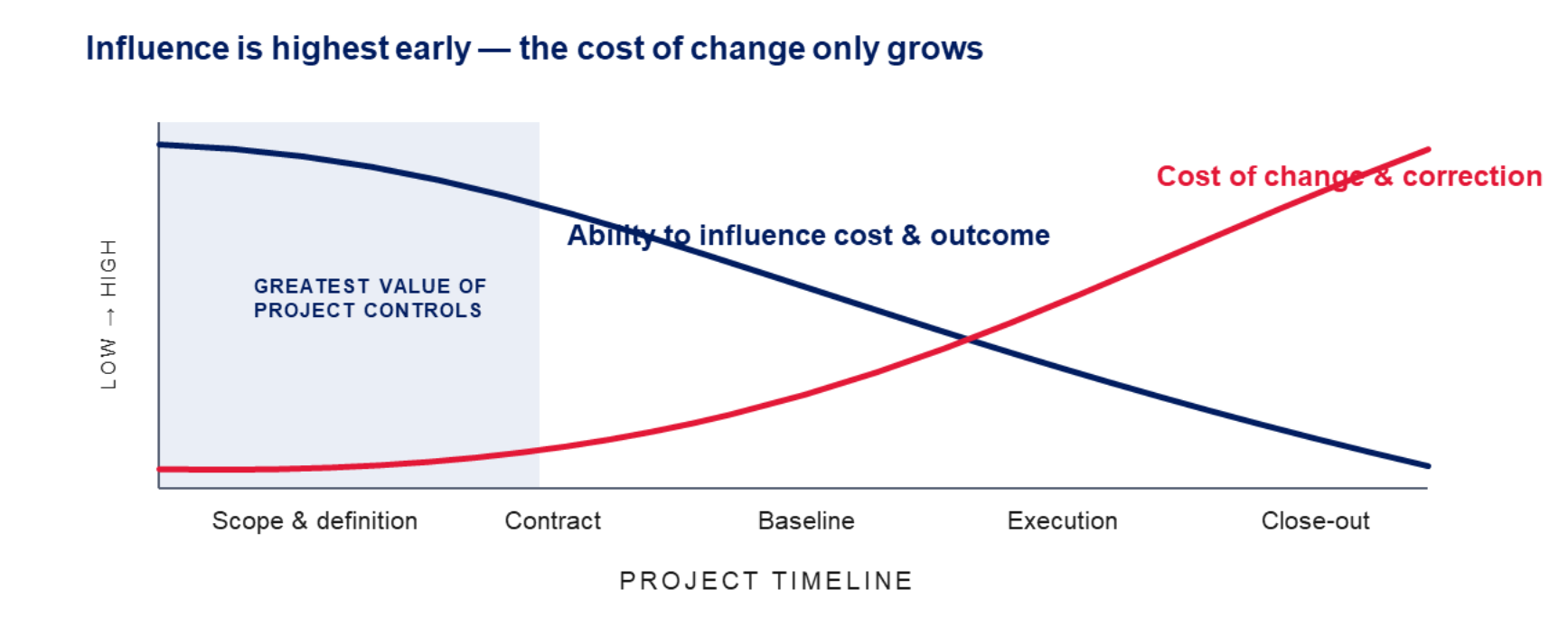
Figure 2 – The ability to influence cost and outcome is highest at the start, exactly when the cost of change is lowest. That early window is where Project Controls creates the most value.
The contract and the schedule should tell the same story
A contract defines scope, responsibilities, obligations, interfaces, milestones and commercial conditions. The project schedule should translate those commitments into an executable plan. Yet these two worlds are often managed separately. Commercial and legal teams focus on the contract, while planners and project teams focus on the programme. When the connection is weak, gaps remain hidden until execution exposes them.
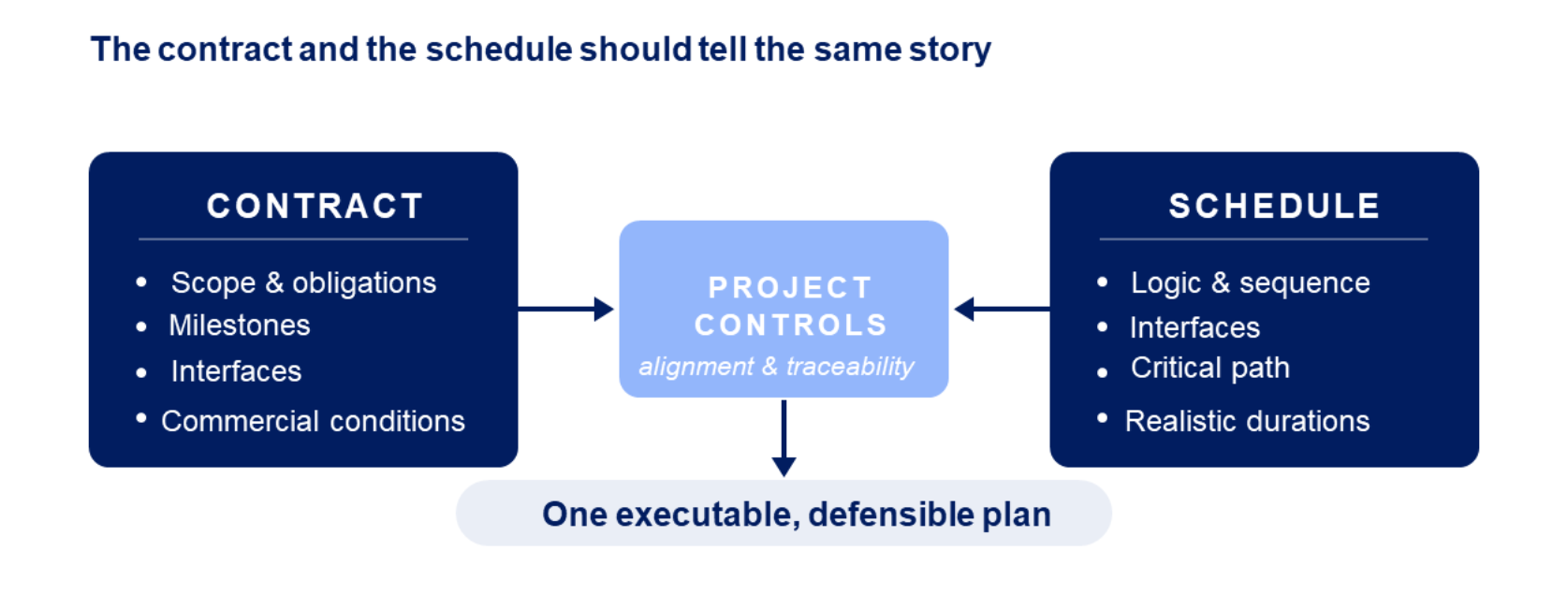
Figure 3 – When contract and schedule are aligned through Project Controls, commitments become one executable, defensible plan rather than two disconnected documents.
The questions that matter are practical: Who owns each interface? When is information required from the client? Which milestone enables the next contractor? What assumptions support the planned durations? Are the contractual dates genuinely supported by the detailed logic?
A schedule can be technically well built and still fail as a management tool if it does not reflect the contractual and commercial reality of the project.
A baseline is more than an approved programme
Approval does not automatically make a baseline credible. A robust baseline should demonstrate that the project is logically achievable, measurable and integrated across engineering, procurement, construction and commissioning.
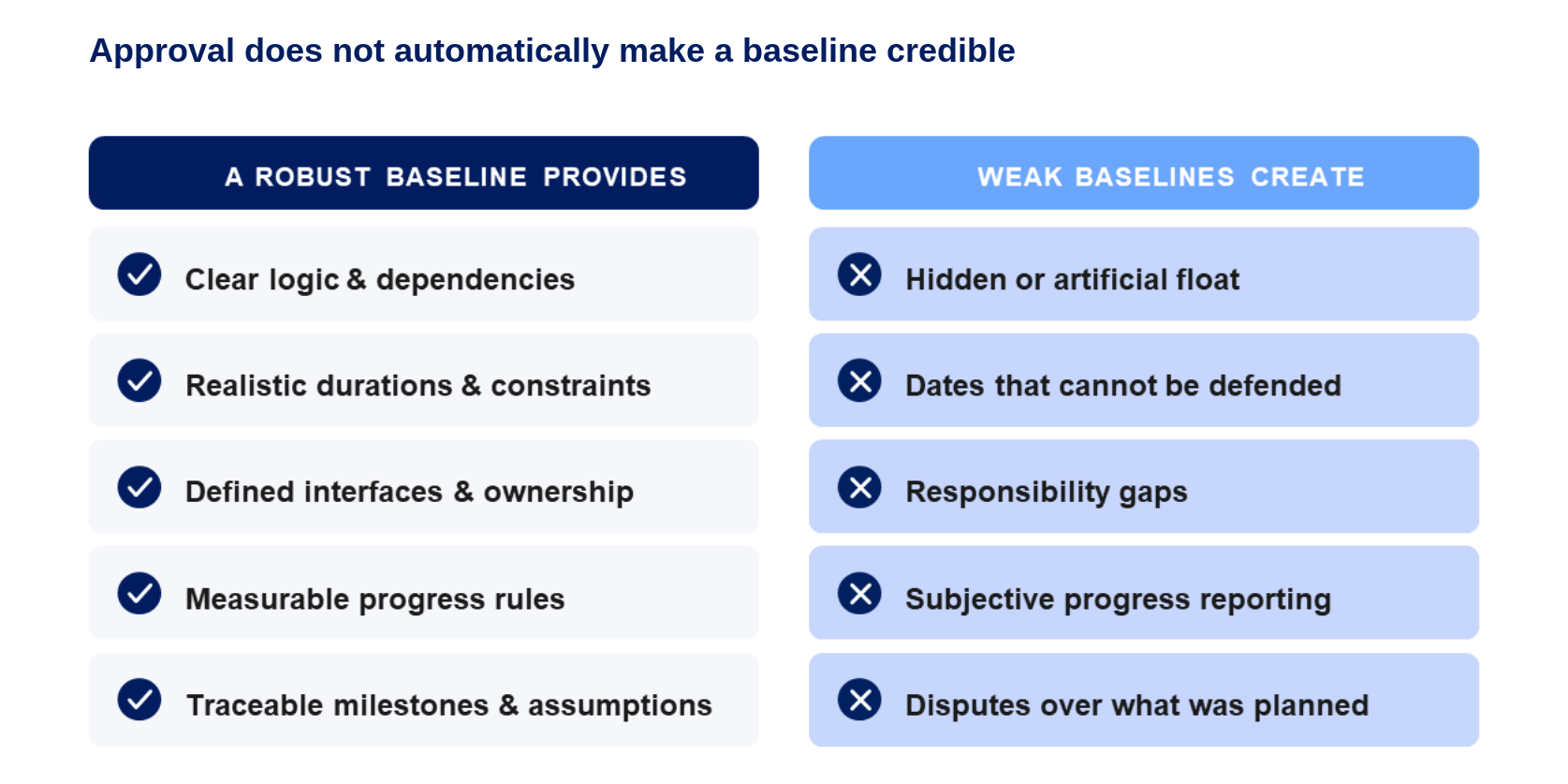
Figure 4 – The difference between a baseline that can be defended and one that quietly stores risk until execution exposes it.
Without a credible baseline, progress reporting quickly becomes a discussion about percentages rather than an objective assessment of where the project really stands.
From reporting problems to preventing them
The real value of Project Controls lies in early visibility. Scope, contract, baseline, progress, forecast and change should not operate as separate processes. They should form one connected control cycle.
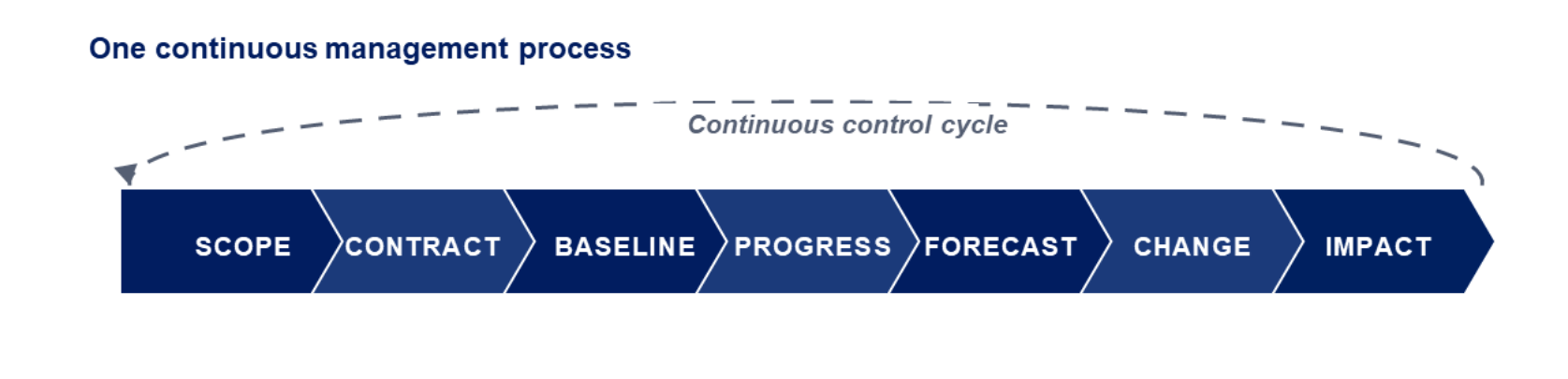
Figure 5 – One connected cycle: each element feeds the next, and the whole loop is revisited continuously as the project evolves.
When these elements are connected, the schedule becomes more than a planning document. It becomes a common reference point for Project Management, Engineering, Procurement, Construction, Commercial and Contract Management. That changes the management conversation entirely.
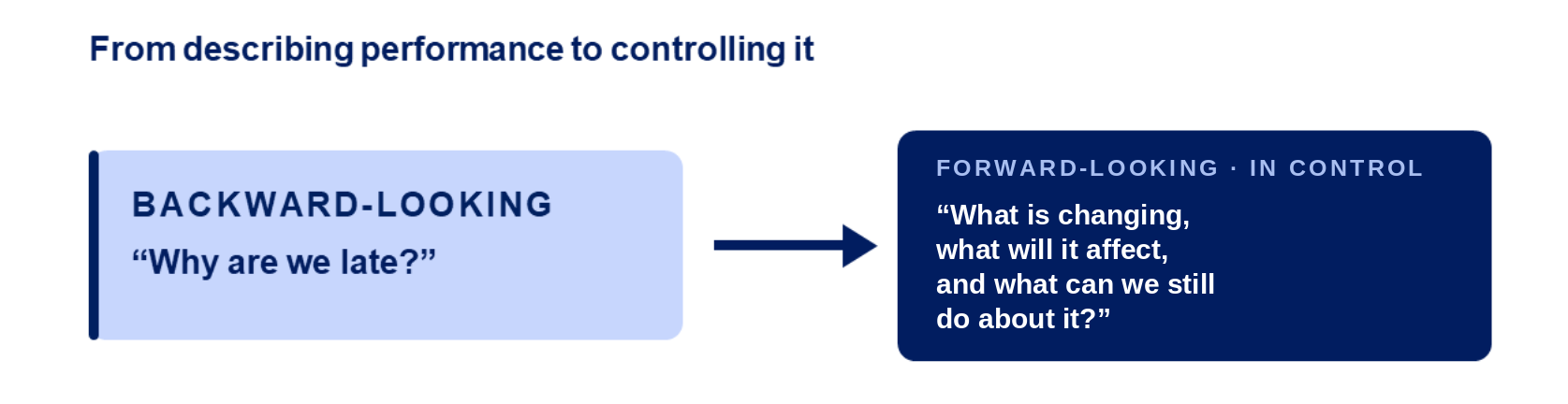
Figure 6 – The shift good Project Controls delivers: from explaining the past to actively steering the outcome.
That is the difference between describing project performance and actively controlling it.
Project Controls should start before execution
One of the most expensive mistakes organisations can make is bringing strong Project Controls into a project only after performance starts deteriorating. By then, the team may already be working with an unrealistic baseline, unclear interfaces, poorly defined progress measurement or insufficient records to objectively analyse delays and changes.
Project Controls creates the most value when it is involved early: challenging assumptions, validating logic, aligning contractual milestones with the schedule, and establishing the framework through which performance and change will later be measured.
Successful projects are not created by better reporting after things go wrong. They are created by establishing clarity before they do.
How INGENIVA helps
We support project organisations with integrated planning, scheduling, cost and risk control, progress measurement, change management and project performance analysis – from the earliest structuring of the project through to close-out.
Good Project Controls does not predict every problem. It makes sure you can see problems early enough to still do something about them.
If you are planning an upcoming project, we are here to provide the necessary expertise. Contact our team at +32 3 651 23 45 or info@ingeniva.eu to discuss the specifics of your project.
Recent Comments